Agnolo Bronzino gives us The Panciatichi Holy Family, c. 1540. This very moving rendition of Christ being blessed by a young St. John the Baptist as a Saint, takes your heart. All look lovingly on the baby divine or Christ child asleep. Mother Mary looks like she is recovering from the birth and has divine velvet cloth around her waist. There is a divine message in the front on a scroll. Christ rests upon a small velvet cushion. And we appear to have Moses in the background looking over St. John. As a family unit they take you to the love of God.
Monday, April 28, 2014
Sunday, April 27, 2014
113
Clown Playing a Drum, 1865-1867, by Honore Daumier, recently exhibited in London at the Royal Academy of Arts, comments about the heart of man. Most of the clown series of Daumier appears to be self-portraiture. One is reminded of current street performers in London and in times gone by a court jester spreading the news, the vocation of the Royal court. Daumier on the other hand worked in France for the lithography press or as a printmaker and why his lithography graphic work is so strong. London do seem to be dominated by the street press and hence this exhibitions appeal. The unfortunate history of freak shows in the United Kingdom has been taken over by newspapers and Daumier would have felt like the town clown and hence, a museum exhibit.
Saturday, April 26, 2014
112
We are taken on another spiritual pathway with Francisco de Zurbaran and his still lives. The painting A Cup of Water and a Rose, c. 1630, of the Spanish Baroque tradition is now currently housed at the National Gallery in London. This divine painting is an offering of Zurbaran's heart through God. The divine silverware and porcelain cup are sacred, the rose is to nominate God. Upon view, this painting is from the Holy order of the divine sacrament of Christ through God to Christ and for some people to the heart of a woman, God bless their wives and the goddess, the Virgin Mary. The rose would equal the heart of God. Philosophy from the early mystic philosophy where study of divine planetary from travelling Christians on a Christian pilgrimage through Spain would have been an influence. Vanitas was a divine message to God of the order of Christ. The still life tradition of Baroque Spain nominates the worth of the Holy, something still celebrated in Spain over Easter. A Holy week is in honor of God.
Friday, April 25, 2014
111
Francisco de Zurbaran gave us The Lamb of God, c. 1635-1640, now housed in San Diego. This special outing takes you through to God equalling the human heart. Recently shown in Ferrara, Italy this extraordinary painting takes you to the lamb of God. He is represented elsewhere in the Ghent Altarpiece, the altarpiece was commissioned by van Eyck, premise thought to be completed by his more famous brother Jan van Eyck, the painting is also called the Adoration of the Mystic Lamb or The Lamb of God. The Zurbaran painting finished the first room of the exhibition with the sweetest feeling you could know in your heart, love, the love of God.
Thursday, April 24, 2014
110
On the other hand, Martin Schongauer has Study of Peonies, 1472. The fold down the print paper is premise perhaps as it was too large for a folder reminiscent of folds of a print in a book. Almost like a heart fold as though he carried the print around with him and put it in his pocket overnight. A love letter from God. The depth of clarity of Schongauer's print work takes you right to the core of the human being and the God zone. Looking at these extraordinary peonies takes you to the blood of Christ and crucifixion. Not ten inch nails of psychological pain or the pain of loving God, simply the beauty of the bumblebee. The rest of his graphic work is this intense, too. A potent reminder of how God equals the human.
Wednesday, April 23, 2014
109
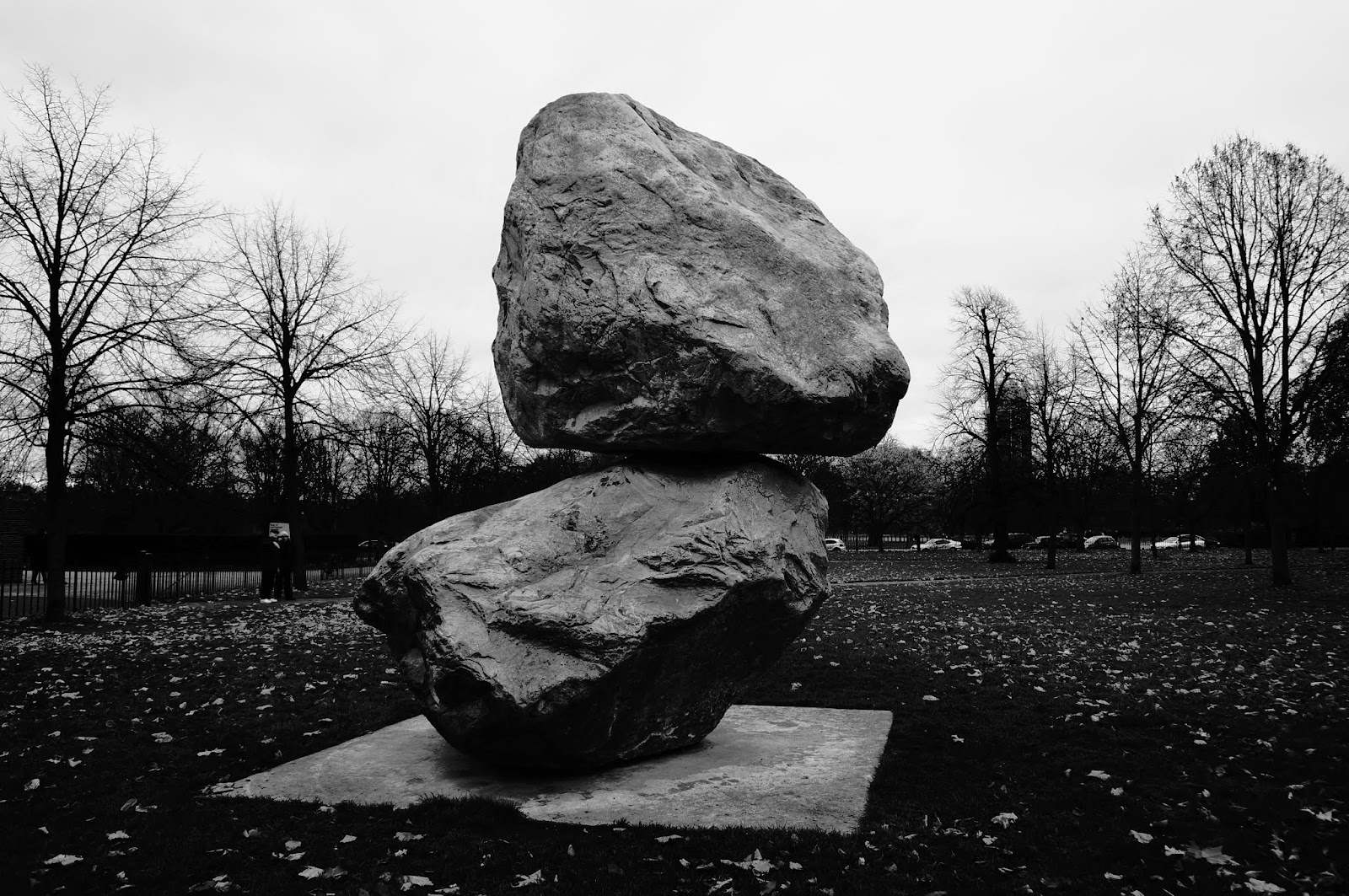
Peter Fischli and David Weiss had on offer their post humorous abstraction series from 1981-2006, a collaboration starting in 1979, at the Venice art Biennale, in Venice, Italy, called Suddenly this Overview. This series of unfired clay sculptures had been exhibited previously in London, 2006. You feel a strange affinity with their banal sense of humour, apparently communicating "unimportant events in the history of mankind", according to the late David Weiss. One does get a sense of a communication before work of their daily ascension. Other artworks of the Fischli/Weiss team included their pet cat, drinking a bowl of milk on video so the everyday appears to have meaning. These crazy unfired sculptures do not suggest anything other than popular themes gone awry or their special understanding unto God of the human being and how they are affected by general reading. Peter Fischli, on the other hand takes us to "the swamp and the simultaneity of these things". We have on offer in the Venice exhibition a small sculpture of a now realized larger version of the banality and the tourist with Rock On Top of Another, with the London garden project.
Tuesday, April 22, 2014
108
Pierre Huyghe takes us with his retrospective view to a place in philosophy that is next to slight and the automatic control of Henri Michaux drawing. These drawings were completed in a controlled drug induced environment to be able to access the unconscious mind closest to God, the Dadaists got there emotionally without aid. The Surrealists took this further into realms of dream. Freud and Jung would have been influential here, too. Their philosophy would have been equally an existential exploration of the human dream but mainly troubled dreams before death, those not quite reaching God before death. Walking through the Pierre Huyghe exhibition was like an extension of his philosophy, almost a beatific vision but more a life, death thing or the end of time, the end of an emotional destruction and possibly French philosophers from French TV that were not relevant to the individual personally. Pierre Huyghe is more a Post Dada continued process of the evaluation of what it is to be a human being in the Western world. His oeuvre is subliminal and takes you through his dream state to question peoples fears and the irrational.
Subscribe to:
Posts (Atom)